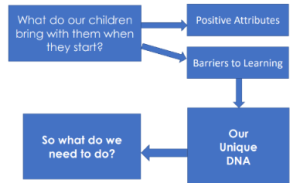
Our Curriculum begins with the needs and requirement of our children, when we designed it in 2020 we considered:
PSPS Curriculum Definition:
The word ‘curriculum’ began as a LATIN word meaning ‘RACE’ or the ‘COURSE OF A RACE’ (which in turn derives from the verb CURRERE meaning ‘to run / to proceed’). The modern derivation appears below.
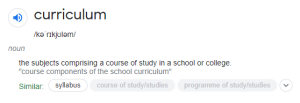
We have used this definition to help provide continued curriculum development for the past 5 years. Our aim is to PROVIDE THE PARK SPRING PUPILS with THE RIGHT COURSE.
We follow the Statutory Framework for the Early Years Foundation Stage (EYFS) and adhere to the Key Stage 1 and Key Stage 2 National Curriculum. Our curriculum is carefully designed to match our context and develop the knowledge, skills and attitudes, to prepare our pupils for the next stages of their education and make a positive contribution in life now and into the future.
For more information on the National Curriculum, including the framework for Key Stages 1 to 4, please follow the link below:
Delivering GROW, KNOW, THRIVE:
Our CURRICULUM OFFER – indeed EVERYTHING WE DO at PSPS is designed to ensure we GROW, KNOW and THRIVE as learners and teachers.
Grow: We nurture personal development and positive relationships, helping every child flourish socially and emotionally.
Know: We build strong foundations in basic skills and Key Knowledge to empower life-long learning.
Thrive: We deliver a PSPS child-centred curriculum that meets individual needs and prepares learners for the future.
We aim to deliver the National Curriculum (but this is JUST our starting point). We have designed our curriculum to deliver the right course for our UNIQUE young people in our UNIQUE setting. This is driven by our SCHOOL VISION and VALUES.
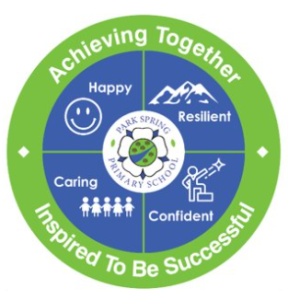
We created and have continued to develop a BROAD and BALANCED and INCLUSIVE CURRICULUM to deliver our SCHOOL VISION of ‘ACHEIVING TOGETHER – INSPIRED TO BE SUCCESFUL.’
PSPS VISION:
ACHIEVING TOGETHER: It is our desire that all pupils achieve highly, regardless of their starting point or background or barriers that they face. We promote positive learning behaviours and encourage our pupils to be self-regulated learners. Our curriculum has explicit learning outcomes across all subjects, and this clarity ensures pupils know what they are learning and why. ‘Hooking’ into the process. Our delivery encourages our pupils to be resourceful-enabled learners, who ask questions, work collaboratively to challenge themselves and others, and enjoy what they are learning and the act of learning itself – INSPIRED TO BE SUCCESSFUL!
PSPS VALUES: The values that guide us in our teaching and that we promote in our curriculum are:
Be HAPPY: At PSPS our curriculum is engaging and exciting and relevant to our children and their context. Having fun, learning together, supporting each other and creating a love of learning is at the heart of everything we do.
Be RESILIENT: Learning takes energy and bravery sometimes. We not only gain knowledge but we LEARN how to LEARN. We get to know ourselves as learners and know that the ability to keep going – even when it is tough is a key skill for life.
Be CONFIDENT: We value ‘having a go’. We might not know for sure that we can do the task or beat challenge – what we do learn is that being confident enough to take on the toughest of tasks and challenges is the important first step to our personal development.
Be KIND: Being kind is one of our 3 school rules also – IT IS THAT IMPORTANT! We know that we SMILE, Say ‘Hi’ and always say nice things. A good person is a kind person.
PSPS Curriculum INTENT Statement: ( … the WHAT do we teach bit …)
Our curriculum is SEQUENTIAL, COHESIVE and KNOWLEDGE BASED (we term Skills and understanding as KNOWLEDGE in-action’).
We insist that our leaders and teachers are REALLY, REALLY CLEAR about WHAT they are teaching, HOW they are teaching and WHY they are teaching any given knowledge content. OFSTED (2022) stated ‘Leaders have worked hard and have designed a strong and ambitious curriculum, starting from the early years. Pupils study the full range of subjects of the national curriculum. They build up their knowledge and understanding in each subject as they move through the school. Pupils remember key knowledge because they revisit previous learning regularly … they continue … The school curriculum is ambitious and well planned, and content is logically sequenced across all subjects. As a result, pupils’ knowledge builds up over time.’
At PSPS we have very strong subject identity with specifically identified knowledge to be learnt. Long term plans ensure sequential learning and systematic order. We have asked our SUBJECT SPECIALIST teachers to design each and every lesson for their respective subjects. In consultation with CLASS TEACHERS that really understand the needs of children in the 3 key stages, our SUBJECT LEADERS have created the MOST AMAZING progressions of learning.
If you return to the Curriculum Tab at the top of this page you can visit each SUBJECT area to view the Y1 to Y6 curriculum coverage.
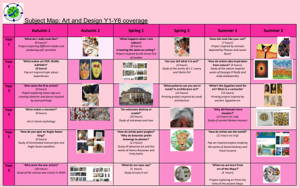
For year group specific Curriculum Maps go to the drop down for classes – where you will find the Long-Term plans and topic themes that each year group studies.
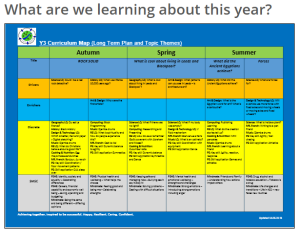
Strong Foundations: The PSPS curriculum begins in the Early Years, which is a strong foundation. All subsequent learning builds from this starting point. We follow the Statutory Framework for the Early ears Foundation Stage (EYFS) and adhere to the National Curriculum Key Stages 1 and 2 frameworks (Sept. 2013).
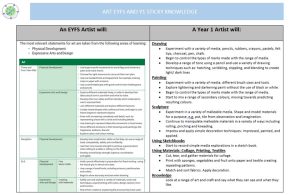
Reading is a Cornerstone and as such we place great emphasis on EARLY READING – Phonics being the foundation stone for reading and for lifelong learning. We aim for children to learn to read as quickly as possible, so they can move from learning to read, to reading to learn. Please see the ENGLISH CURRICULUM page for more detail.
The Broader Curriculum
Relationships and Health Education (Primary Schools): Our Relationships and Health Education (RHE) curriculum is designed to promote the well-being and personal development of our children. It covers important topics such as emotional health, positive relationships, and healthy lifestyle choices. Lessons are delivered in an age-appropriate manner, following our RHE policy to ensure inclusivity and respect for all students. This curriculum supports children in understanding and managing their emotions and relationships effectively.
We explicitly teach our children to identify and share their feelings and teach them how to manage them. A focus is that all staff also engage in sharing their identified emotions at that moment. To support this we utilise Forest Schools, Commando Joes, OPAL, and Zones of Regulation. For further detail please see the Personal Development and Well Being page on this website.
Spiritual, Moral, Social, and Cultural Development (SMSC): We place a strong emphasis on SMSC development within our curriculum. Through various activities and experiences, students are encouraged to explore their own beliefs, understand and respect diverse cultures, and develop a sense of responsibility towards others. Our approach is integrated into daily teaching and school life, ensuring that students grow as well-rounded individuals with a strong sense of community and personal values.
British Values: Our curriculum incorporates British values, including democracy, the rule of law, individual liberty, and mutual respect and tolerance. These values are embedded in our teaching practices and school ethos, helping students understand their importance and apply them in their interactions with others. We reinforce these values through our school policies and classroom activities, promoting a respectful and inclusive environment.
PSPS Curriculum IMPLEMENTATION Statement : (… the HOW do we teach bit …)
At PSPS our curriculum is a knowledge-based progressive framework designed to facilitate a gradual (small-step) and coherent acquisition of KNOWLEDGE. This SPIRAL curriculum model, where key knowledge is revisited and built upon over time allows pupils to consolidate their learning gaining, fluency, automaticity and MASTERY through repeated exposure and application in a variety of contexts.
We are very proud of the PSPS curriculum offer and we are committed to ensuring that all pupils enjoy learning. We foster a culture where children are encouraged to be curious, creative, and confident learners, supported by dedicated staff and a strong partnership with families. We want our children to do more, know more and remember more- we learn by having fun! (Ask our children about the Purple Cow!)

Experiential Learning – Cultural Capital: We have ensured the children will experience the BEST OF THE BEST. They will learn about the BEST DEISGNERS, AUTHORS, SCIENTISTS, DESIGNERS, SPORTS PEOPLE amongst others. We have ensured we use our using our amazing school grounds and our local area much more effectively. This will help our children understand whom they are, where they come from and see there place in the wider world. We know our pupils learn best when motivated and having fun. As such our curriculum allows for as many firsthand and practical experiences as possible. Trips, visits, and visitors support this – we aim to provide experiences to our children that they might not otherwise experience. We aim to use our locality as much as possible to ensure it is meaningful and memorable
Interconnected Learning: KNOWLEDGE SKILLS LINKS
‘Ensuring pupils routinely use wider knowledge when learning something new’
In response to our OFSTED report (March 2022) ‘Leaders need to continue to refine the interconnected curriculum so that knowledge in each subject is also linked to other subjects to support pupils to better integrate new learning.’), we have defined INTERCONNECTED LEARNING as ‘The routine use of wider knowledge within and between subjects. Links made are RELATED APPLICATION OF KNOWLEDGE not mere THEMATIC LINKS.’ At PSPS we refer to 3 types of interconnections:
Horizontal: Links from another unit in the same year group but a different subject
Vertical: Links from previous learning in this subject
Diagonal: Links from previous learning cross subject and other year groups
We developed DELIBERATE PLANNING to ensure teachers were aware of the KNOWLEDGE LINKS that should be referred to.
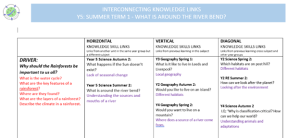
Pupils will see the symbol below in the teaching slides – helping the teacher make these links explicit and clear.

Not all lessons will have INTERCONNECTION, where it does exist teachers must reference it in a way that will help the children KNOW and REMEMBER more. Learning time must be balanced carefully to ensure new learning takes place as well as reminding them of previous learning. If the INTERCONNECTION is strong, it is worth spending the time making the link.
Curriculum Inclusion at Park Spring Primary School:
At PSPS Primary School, we are committed to setting high expectations for all our pupils and ensuring that each child is provided with the support and challenge necessary to achieve them. Our approach to teaching is inclusive and tailored to meet the diverse needs of our students, adapting the teaching to ensure that every child has the opportunity to succeed.
In our ‘Quality First Teaching we utilise research from the Education Endowment Foundation (EEF) SEND 5-a-day approach. We provide targeted support and tailored interventions for pupils who have lower starting points or gaps in knowledge. In whole class teaching, we adapt our teaching using strategies suggested by the educational Endowment Foundation EEF guidance called 5 a day. This includes scaffolding learning, resources, prompts, adapted tasks, and peer support. We place a lot of emphasis on practice of basic skills, so that children have a solid knowledge base with knowledge embedded in the long-term memory. Our aim is to help these pupils make significant progress and close any gaps in knowledge.
We utilise the focus of KEEP-UP and CATCH-UP. Our preference is that through MASTERY learning children are helped to ‘keep up’ via skilled teaching, on-going assessment and early intervention. Where catch up is required teachers can provide differentiated rather than adapted learning in QFT or as something additional and extra to the typical course of learning
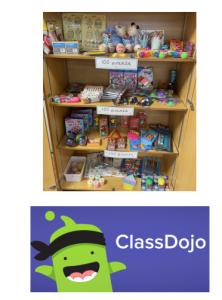
Motivation / Self-Regulation: Our aim is for all pupils to be intrinsically motivated to learn. We have high ambitions for all learners and for everyone to achieve, pupils need to know how to learn and how they as individuals learn best. We want them to own their own learning and evaluate their own effectiveness. We promote pride in all our learning and love to celebrate success. We use individual rewards (DOJO points) to recognise positive learning qualities and via our weekly Celebration assemblies and Half termly Recognition assemblies. Children are rewarded through our use of the CLASS DOJO system, Points really do make PRIZES!
Enabling environments: We want our pupils to be independent and support themselves in the learning process, rather than seeking adult support in the first instance. In our classrooms, they have resources that they can access themselves, and are encouraged to do so. Examples are working walls, visual aids, word cards, phonic mats, using their book to refer back to, knowledge mats. Classes all have visual timetables which are designed to provide all pupils with clarity and predictability, aiming to reduce anxiety and increase pupil independence – supporting daily routines and reducing the risk of avoidant or distracting behaviours. By providing a structured and predictable schedule, visual timetables help pupils manage their time effectively, which is an important executive function.
Assessment and Target Setting: Our learning is planned so that pupils have plenty of RETRIEVAL PRACTICE TIME. Knowledge organisers help them focus their learning. Iterative assessment opportunities ensure that WE INTERUPPT THE FORGETTING – ensuring that PSPS child LEARN MORE, DO MORE but most IMPORTANLTY REMEMBER MORE. At PSPS we use a range of assessment methods to understand each pupil’s current level of attainment and potential for growth. By setting ambitious targets based on these assessments, we ensure that all pupils are challenged and motivated to excel. We have termly pupil progress meetings to evaluate progress so far and what needs to happen next for a child to be successful. Our approach includes:
High expectations for ALL:
Our commitment to inclusive education means that teachers at PSPS plan lessons with the goal of removing barriers to learning for all pupils. This involves:
Personal Development and Well-Being: Running parallel to our ACADEMIC studies, we have re-organised our approach to our pupils’ PERSONAL DEVELOPMENT. Everyone who has visited our school ALWAYS comments on the SPECIAL, WARM, WELCOMING and FRIENDLY atmosphere – particularly from the children! To continue to nurture this we now have a leader of PERSONAL DEVELOPMENT ans WELL-BEING that is busy co-ordinating and planning to go BEYOND the expected, in order that pupils have access to the widest, richest set of experiences, that we develop their talents and interests and that these are provided in a coherently planned way so that a PARK SPRING PUPILS’ CHARACTER is EXEMPLARY and an inspiration to others.
At PSPS we celebrate our similarities and differences and ensure that we respect diversity. Through our curriculum and collective worship, we expose our children to different cultures, faiths and backgrounds as well as challenging stereotypes. To support this we plan in focus weeks such as Black History Week and focus FAITH WEEK studies which we feel that this is particularly important as the vast majority of our school community is White-British.
Through our ‘VOTES FOR SCHOOLS’ resource, children are given the opportunity to discuss current issues linked to our British Values; Individual Liberty, Mutual Respect, Democracy and Rule of Law.
Our children are given the opportunity to make a positive contribution to our school community through roles such as School Council, Attendance Ambassadors, Mindmate Champions, Digital Leaders and OPAL Play Detectives. Organising fundraising events and forming links with our local community help our children to think about the wider role of being a good citizen.
Pedagogy: AT PSPS we have an agreed and defined set of teaching approaches. Please see this website for further details.This definition and summary ensure PSPS leaders and staff have a strong, shared understanding of effective teaching and how pupils learn, to deliver the curriculum effectively (the IMPLEMENTATION) across all subjects, year groups and key stages.
PSPS Curriculum IMPACT Statement : (… the SO WHAT? How do we know we are being successful in our teaching bit …)
IMPACT: We measure the Impact of our curriculum approach through a range of methods. We want to ensure that our pupils are not only progressing academically but also as well-rounded citizens.
At PSPS the Leadership Team (Staff and Governors) play play a crucial role in overseeing the coverage of National Curriculum subjects and ensuring compliance with statutory requirements. They utilise a range of methods to effectively monitor and evaluate the quality of education provided:
Subject and Curriculum Monitoring
Subject Leaders, and Curriculum Leaders at PSPS are responsible for monitoring the delivery of their subjects to ensure high standards and effective teaching throughout the school. They employ various methods to support and enhance the quality of education:
By utilising these monitoring arrangements, both governors and subject leaders at PSPS work collaboratively to ensure that the curriculum is effectively implemented, meets statutory requirements, and provides a high standard of education for all students.
April 2, 2026

